




We think you'll agree with us: makeup is a (love) story of colors! And that's good news, because we've learned some amusing anecdotes about iconic colors that we wanted to share with you - a little culture never hurt anyone! -
Alright, we're going to tell you everything - that we know! - about pink, this soft pink, and you'll see, this article will make you relax!
Is pink a color: true or false?

And yes, pink was considered a shade of red - we'll tell you everything (we know) about this color here -, just as light green is a shade of green, or light blue a shade of blue, or... - no, we're kidding, you get it! - It's a kind of "half-color" - like when you get a half-baguette at the bakery, or a demi at the bar #chooseteam -
Around the 15th century, Venetian merchants had the tender idea of importing a new coloring material into Europe: Brazilwood or pernambuco, and that's when the pink hue appeared!

But before the end of the 18th century, people only spoke of "pale red" or "incarnat" - from the Italian incarnato, derived from carne, "flesh" - basically, pink is the color of skin and that's it! - well, in Europe, because skin color is relative, in terms of inclusivity we'll have to come back to that! -
The color got its new French name at the beginning of the 19th century, borrowed this time from the complexion of the flower: the rose.
Pink remains very difficult to define, there are many different shades - not to mention 50 shades of pink -. In Japan, there are at least 7 different terms for pink... - We're not ready to learn Japanese! -
Pink is for girls: true or false?
In today's collective imagination, the equation is simple: pink = girl!
If you had to buy a birth trousseau in the 12th century, you would have made a mistake! The complete opposite of today: blue, the divine color of the Virgin Mary, was associated with girls, while pink, unknown at the time and described as "pale red," was rather virile, for boys! - that blows your mind, doesn't it? -
If we go back to the Middle Ages and the Renaissance, pink was MAS-CU-LINE! Knights wore magnificent pink hose, hunters and even monarchs also wore pink - very virile Henry IV with his little pink tunic, don't you think? -
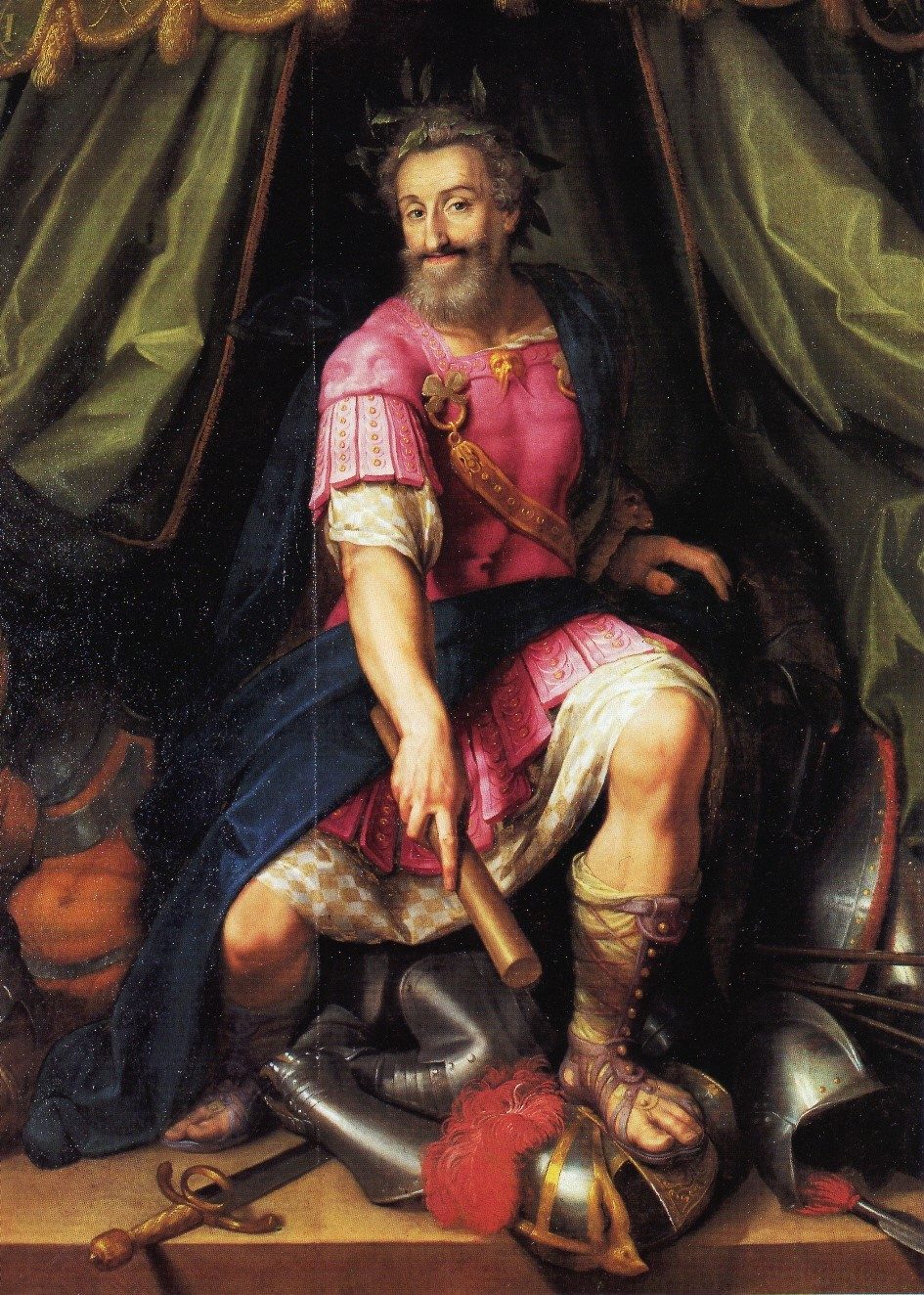
The Portrait of Henry IV In March by Jacob Bunel 1606
The turnaround came in the 18th century: the Marquise de Pompadour appropriated the color and wore a pink dress at Versailles, which even earned it the reference "Pompadour pink" - like Klein blue, Soulages black, Hermès orange... and Pomponne yellow! -
With the Romantic movement, pink cut the umbilical cord with red! Goodbye warrior character, hello softness and femininity! But be careful not to fall into sentimentality with the arrival, in the 20th century, of the expression "rosewater." - thanks to Michel Pastoureau, specialist in the symbolism of colors! -
It was in the 1900s that pink really became gendered and that the equation girl = pink ≠ boy = blue was validated by math teachers...
Female icons of the 1950s and 1960s hammered it home: Brigitte Bardot with her pink gingham dress on the cover of Elle Magazine, Marilyn Monroe and her "shocking pink" form-fitting dress from Schiaparelli, or Jackie Kennedy and her Chanel suit.
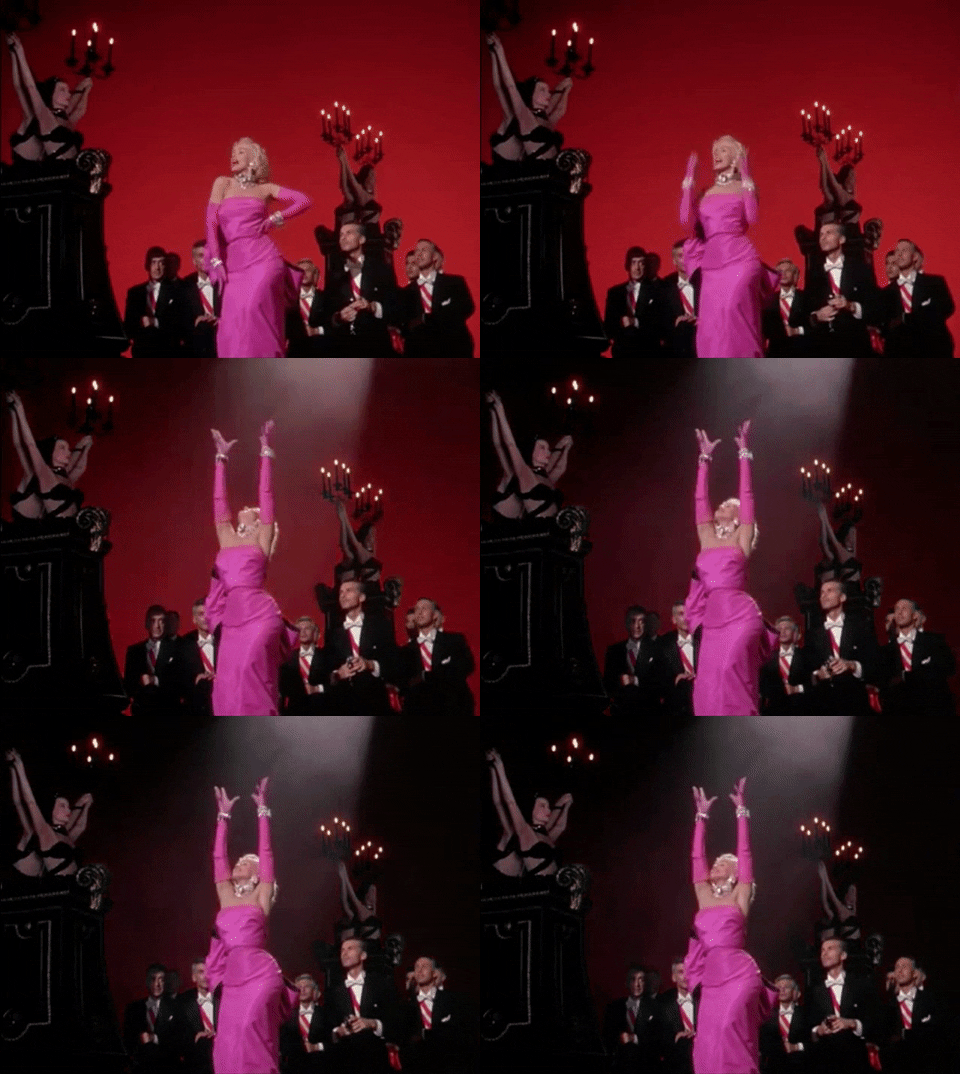
And that's it, the entire post-war generation grew up with this stereotype.... pink toys for girls, blue for boys, pink razors for women, blue for men...! - yes, when you grow up, the toys change! -
Our friend Michel - the specialist - also suspects the famous Barbie doll played a significant role in this history...
It is also said that pink is "the color of millennials," also called "Tumblr pink" in its salmon to peach shade: it is said to be androgyne and symbolize the famous end of gender... - do you believe it? -
Pink, the color of rebels: true or false?
In the 17th century, when women wanted rosy cheeks, since blush didn't exist, they pricked their cheeks to make them pink against their white complexion... If that's not rebellious! - ouch ouch ouch, how much they had to suffer to be beautiful! -
In the 21st century, it's also true... Goodbye candor and naivety, hello revolt!
The protest movements of the 60s in the United States and Europe shook up the symbolism of pink: it was rejected by feminists of the time and reappropriated by the Flower Power movement.
It returned to the streets after Donald Trump's election, with thousands of women marching in Washington wearing a pink "Pussy Hat," to denounce the sexist remarks made by the US president. - And there, we sing with Beyoncé! -

There you go, Pomponnette, you know everything - that we know! - about pink. Starting tonight at your Zoom or Houseparty happy hour, we can already see you telling all this to your friends - we always need jam for breakfast, and we know what we're saying about culture ;) ! -
If you have other anecdotes to tell us to enrich this article, we're all ears!
Let's spread the Smile Power,
Agathe & Charline